Overview
RDIMM (Registered DIMM), UDIMM (Unbuffered DIMM) and SODIMM (Small Outline DIMM) are the three most common DRAM module form factors used in servers, desktop computers and compact embedded systems.
Each memory type is designed for different computing platforms. RDIMM provides maximum capacity and stability for enterprise servers, UDIMM is widely used in desktop and industrial computers, while SODIMM is optimized for space-constrained systems such as embedded devices and laptops.
This guide compares RDIMM, UDIMM and SODIMM to help engineers and system integrators choose the right memory solution for industrial PCs, embedded platforms, networking equipment, medical devices and enterprise servers.
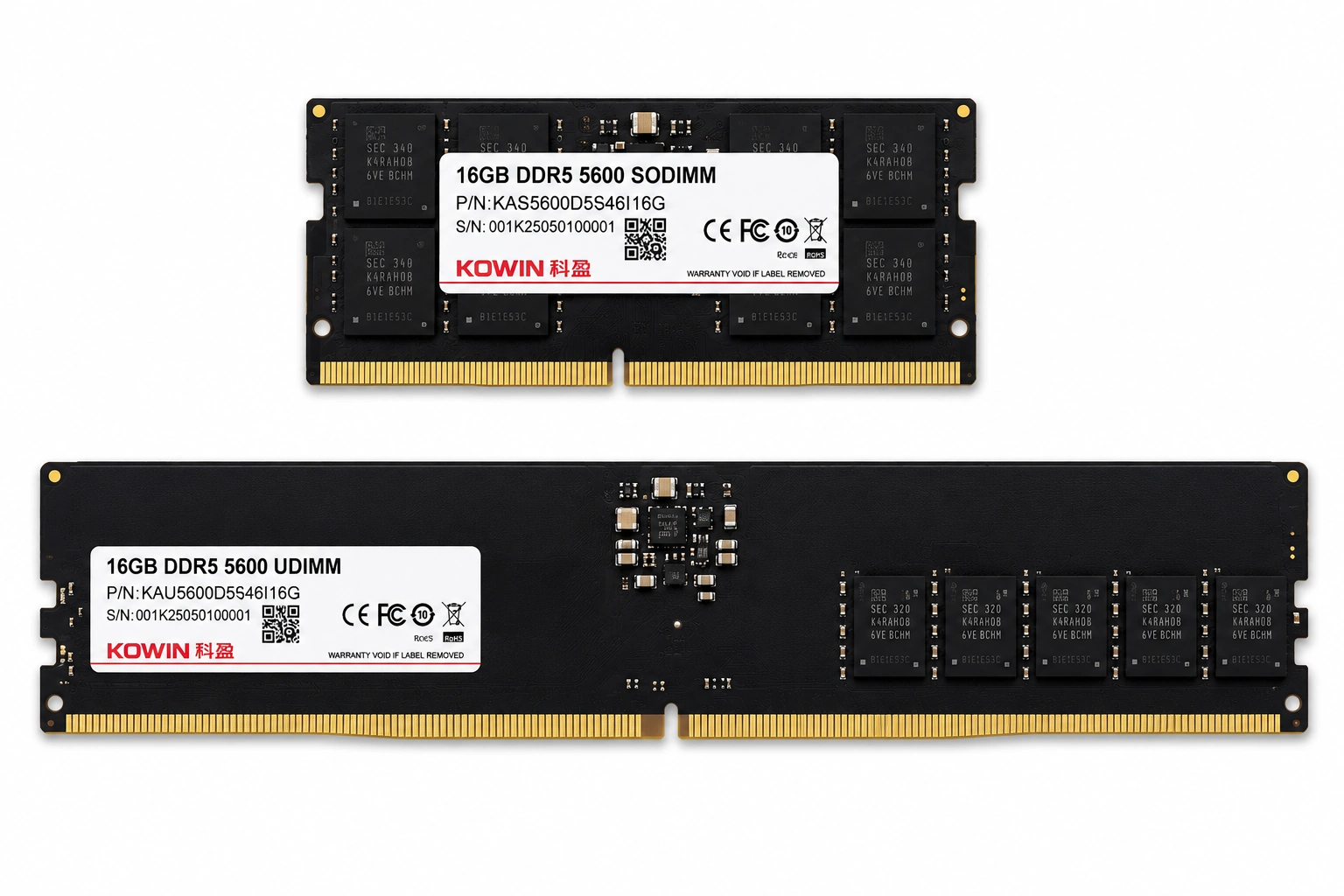
RDIMM vs UDIMM vs SODIMM Comparison
The following table summarizes the key differences between the three most widely used DRAM module form factors.
| Feature | RDIMM | UDIMM | SODIMM |
|---|---|---|---|
| Full Name | Registered DIMM | Unbuffered DIMM | Small Outline DIMM |
| Buffered | Yes | No | No |
| ECC Support | Yes | Optional | Optional |
| Typical Capacity | High | Medium | Medium |
| Signal Integrity | Excellent | Standard | Standard |
| Power Consumption | Slightly Higher | Lower | Lower |
| Primary Platform | Servers | Desktop / Industrial PC | Embedded / Laptop |
| Typical Applications | Enterprise Servers | Industrial PCs | Embedded Systems |
| Recommended For | Mission-Critical Computing | General Computing | Compact Computing |
Advantages & Characteristics
Each memory module type is optimized for different computing environments. Understanding their characteristics helps engineers select the most suitable solution for performance, reliability and system compatibility.
Typical Applications
Different memory form factors are designed to meet the requirements of various computing platforms, from enterprise servers to embedded and industrial systems.
Enterprise Servers
RDIMM provides high capacity and stability for server platforms.
Workstations
Professional workstations benefit from large memory capacity and reliable performance.
Desktop PCs
UDIMM is the standard memory module for desktop computing systems.
Industrial PCs
Reliable operation for industrial automation and machine control.
Embedded Systems
SODIMM is ideal for compact embedded platforms and edge devices.
Medical Equipment
Provides dependable performance for healthcare and diagnostic systems.
Networking Equipment
Supports routers, firewalls and communication infrastructure.
Edge Computing
Compact memory solutions for AI, IoT and distributed computing.
Frequently Asked Questions
RDIMM (Registered DIMM) includes a register between the memory controller and DRAM chips, improving signal integrity and allowing higher memory capacities. It is primarily used in enterprise servers and data centers.
RDIMM uses a register to improve stability and supports larger memory configurations, while UDIMM connects directly to the memory controller, making it suitable for desktop PCs and most industrial computers.
No. RDIMM and UDIMM are not compatible with each other and cannot be installed together. Always follow your motherboard or server manufacturer's memory compatibility guidelines.
SODIMM is the preferred choice for compact systems such as embedded computers, industrial controllers, laptops and edge computing devices where space is limited.
Technical Resources
Explore additional memory technology guides to better understand DRAM solutions and select the appropriate memory module for your application.
Need help selecting the right memory module for your application?
Request the latest datasheet or contact our engineering team for memory recommendations.
Request Datasheet