Overview
SATA SSDs use the SATA III interface and AHCI protocol, providing reliable performance, excellent compatibility and cost-effective storage for industrial computers, embedded systems and general-purpose applications.
NVMe SSDs utilize the PCI Express (PCIe) interface and NVMe protocol to deliver significantly higher throughput, lower latency and faster response times, making them ideal for AI computing, gaming systems, enterprise servers and data-intensive workloads.
This guide compares SATA and NVMe SSD technologies to help engineers, system integrators and purchasing teams select the most suitable storage solution based on performance, application requirements and system compatibility.
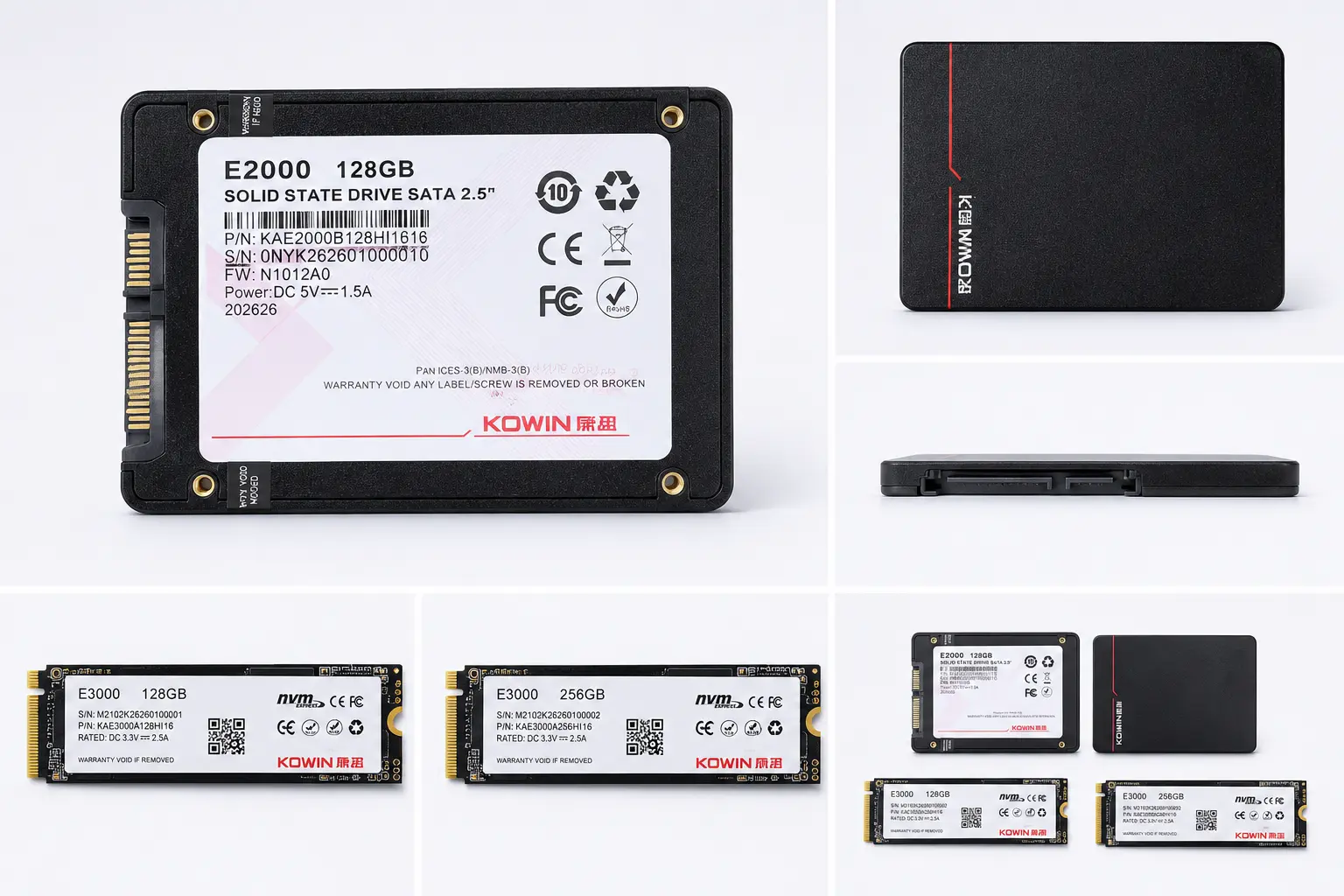
SATA vs NVMe SSD Comparison
The following table summarizes the major differences between SATA and NVMe SSD technologies.
| Feature | SATA SSD | NVMe SSD |
|---|---|---|
| Interface | SATA III (6Gb/s) | PCI Express (PCIe) |
| Protocol | AHCI | NVMe |
| Maximum Sequential Read | Up to 550 MB/s | Up to 7,000+ MB/s |
| Latency | Higher | Lower |
| Power Efficiency | Good | Excellent |
| Cost | Lower | Higher |
| Typical Applications | Industrial PCs, POS, Embedded Systems | Gaming, AI Computing, Workstations |
| Recommended For | General Storage | High Performance Computing |
Advantages of SATA & NVMe SSD
Both SATA and NVMe SSDs offer significant advantages over traditional hard drives. The best choice depends on your application's performance requirements, interface compatibility and budget.
Typical Applications
SATA and NVMe SSDs are deployed across a wide range of commercial, industrial and enterprise systems depending on storage capacity, performance and workload requirements.
Industrial PC
Reliable storage for industrial automation and control systems.
Embedded Systems
Compact and efficient storage for embedded computing platforms.
Gaming Systems
High-speed loading and responsive performance for gaming applications.
AI Computing
High-bandwidth storage for AI inference and machine learning workloads.
Medical Equipment
Dependable storage for diagnostic and healthcare systems.
Factory Automation
Industrial-grade SSDs for continuous manufacturing environments.
Edge Computing
Fast local storage for distributed edge devices and gateways.
Data Centers
High-performance NVMe storage for enterprise servers and cloud infrastructure.
Frequently Asked Questions
SATA SSD communicates through the SATA III interface using the AHCI protocol, while NVMe SSD utilizes the PCI Express interface with the NVMe protocol, providing significantly higher bandwidth, lower latency and faster overall performance.
NVMe SSD is considerably faster than SATA SSD. While SATA SSD is limited to approximately 550 MB/s, PCIe Gen4 NVMe SSD can achieve sequential read speeds exceeding 7,000 MB/s.
Only if your motherboard or embedded platform supports an M.2 PCIe NVMe interface. SATA SSD and NVMe SSD are not always interchangeable because they use different communication protocols and connectors.
SATA SSD remains an excellent choice for industrial systems requiring proven compatibility and long-term stability. NVMe SSD is recommended for applications demanding maximum storage performance such as AI computing, machine vision and high-speed data acquisition.
Technical Resources
Explore additional storage technology guides to better understand SSD interfaces, PCIe performance and embedded storage solutions.
Need help selecting the right SSD solution?
Request the latest datasheet or contact our engineering team for storage recommendations.
Request Datasheet