Overview
NAND Flash is the foundation of modern solid-state storage and is widely used in SSDs, eMMC devices and embedded memory products. The four primary NAND technologies—SLC, MLC, TLC and QLC—store different numbers of bits in each memory cell, directly affecting performance, endurance, capacity and cost.
SLC stores one bit per cell for maximum reliability, while MLC, TLC and QLC progressively increase storage density by storing two, three and four bits per cell. This evolution has enabled larger capacities and lower costs while balancing endurance and performance for different applications.
This guide compares SLC, MLC, TLC and QLC NAND Flash technologies to help engineers and system designers choose the most appropriate storage solution for industrial, embedded and commercial systems.
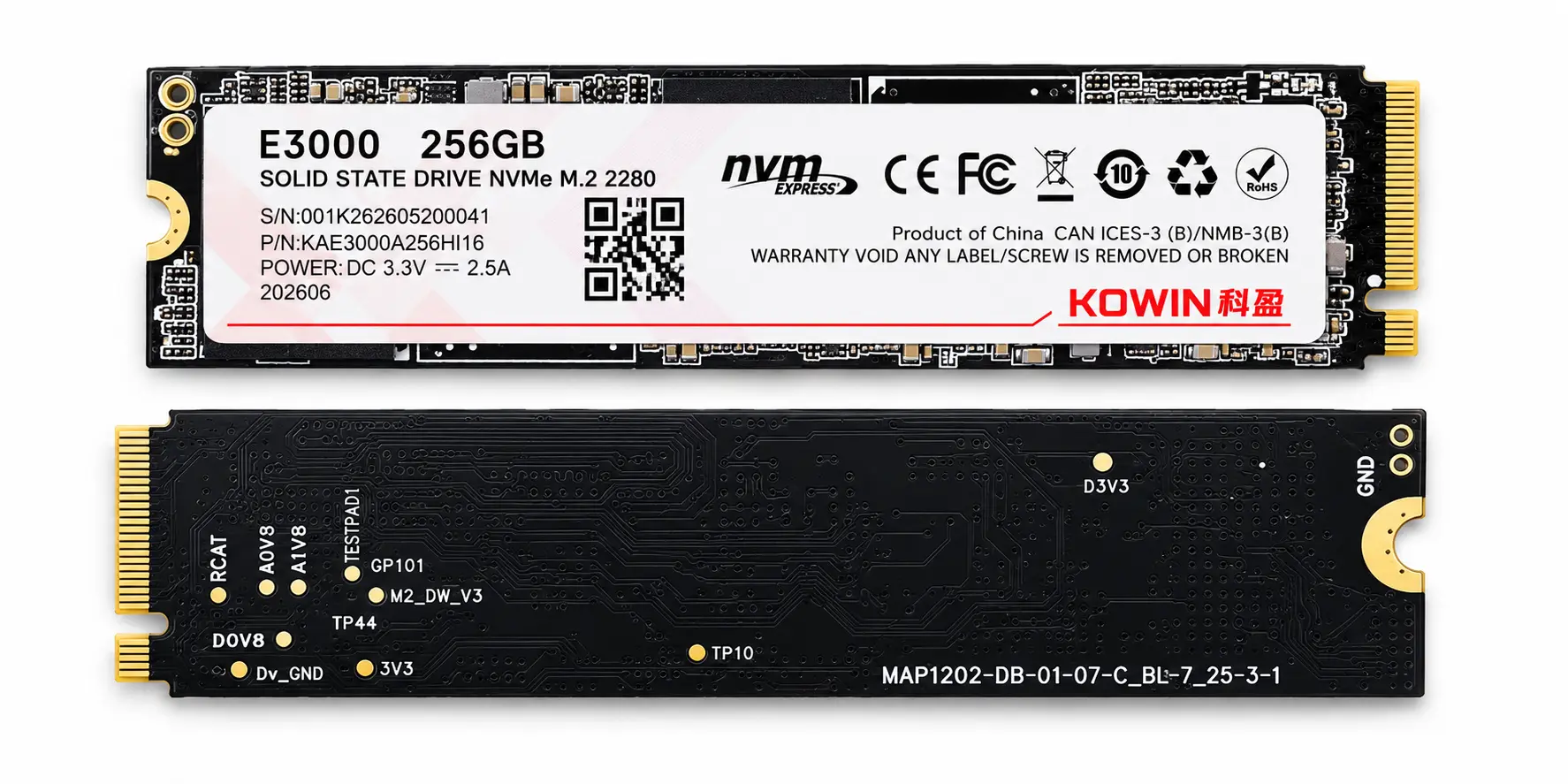
NAND Flash Architecture
Each generation increases the number of bits stored in a single memory cell, improving storage density while reducing manufacturing cost per gigabyte.
SLC
Highest performance, highest endurance and maximum reliability for mission-critical industrial applications.
MLC
Balances endurance and capacity, making it suitable for enterprise and high-reliability systems.
TLC
The most widely used NAND Flash technology for commercial SSDs and embedded storage.
QLC
Provides the highest storage density and lowest cost for large-capacity storage solutions.
Comparison Table
The following comparison highlights the key differences between SLC, MLC, TLC and QLC NAND Flash technologies.
| NAND Type | Bits / Cell | Speed | Endurance | Cost | Typical Use |
|---|---|---|---|---|---|
| SLC | 1 | Highest | Highest | Highest | Industrial Systems |
| MLC | 2 | High | High | High | Enterprise Storage |
| TLC | 3 | Good | Good | Medium | Commercial SSD |
| QLC | 4 | Moderate | Lower | Lowest | High-capacity Storage |
Typical Applications
Technical Resources
Explore additional SSD technology guides to better understand storage interfaces, performance and NAND Flash technologies.
Need help selecting the right NAND Flash solution?
Request the latest datasheet or contact our engineering team for NAND Flash recommendations.
Request Datasheet